Oil Surges Past $100, Gold Slides as Geopolitical Tensions Grip Markets
wealthvista.top Editorial · May 21, 2026 · 7 min read
Executive Summary
Oil reclaimed the $100 mark on Thursday, climbing 2.3% as Iran’s Supreme Leader barred the export of near-weapons-grade uranium — a hardline move that undermined USIran peace talks and revived fears of a prolonged Strait of Hormuz closure. The resulting jump in energy costs dragged equities lower, with the S&P 500 slipping 0.32% from its record close just a day earlier. Gold gave up gains from the prior session, falling below $4,520 as prospects for a diplomatic breakthrough faded. Separately, minutes from the Fed’s April meeting revealed that most officials think additional rate hikes are on the table if inflation refuses to cool.
Oil Surges Past $100 as Iran Nuclear Talks Hit a Wall
WTI crude futures rose around 2% to settle at $100.54 per barrel, partially recovering from a nearly 6% drop over the previous two sessions. The move higher was triggered by a Reuters report that Iran’s Supreme Leader had issued a directive prohibiting the export of the country’s near-weapons-grade uranium — a key demand from the US side in ongoing nuclear negotiations. The directive effectively hardened Tehran’s position at a moment when markets had been pricing in a deal.
Adding to the uncertainty, Iran announced the creation of a “Persian Gulf Strait Authority” and said it would enforce a “controlled maritime zone” in the Strait of Hormuz — the world’s most critical oil chokepoint. Combined with US inventory drawdowns and a 10-million-barrel release from the Strategic Petroleum Reserve last week (the largest on record), oil prices remain roughly 50% above their pre-conflict levels.
 Image source: Wikimedia Commons
“The market was positioned for a deal. This throws cold water on that expectation,” said one energy strategist in London, speaking on condition of anonymity because of sensitivity around geopolitical coverage. “You don’t just reopen Hormuz with a handshake.”
Brent crude similarly gained, trading around $104 per barrel. The energy sector was one of the few bright spots in an otherwise down day for risk assets.
Sources: Oil above $100 as Iran hardens position — Trading Economics · Iran establishes Strait Authority — Reuters
Fed Minutes: Hawkish Turn, Four Dissenting Votes
Minutes from the Federal Reserve’s April meeting showed that a majority of officials believe some policy firming would become appropriate if inflation continues running persistently above the 2% target. Several participants went further, saying they would have preferred removing the language in the post-meeting statement that had signaled an easing bias for future rate decisions.
The Fed held the fed funds rate at 3.5%–3.75% for the third consecutive meeting, but the 8-4 vote marked the first time since October 1992 that four officials dissented against a FOMC decision. The split signals a deeper divide within the committee than at any point in over three decades.
The market reaction was muted in equity futures but showed up in the dollar and short-term rate pricing. Traders currently assign roughly a 40% probability of a 25 basis-point hike by December, up from around 30% a week ago.
Fed Chair Jerome Powell has consistently framed the central bank’s stance as data-dependent, but the minutes suggest the internal bar for holding steady is getting higher.
Sources: Fed minutes show hawkish shift — Trading Economics · FOMC April meeting minutes — Federal Reserve
April Inflation Hits 3.8%, Highest Since May 2023
The US annual inflation rate accelerated to 3.8% in April, up from 3.3% in March and above consensus forecasts of 3.7%. It marks the highest reading since May 2023, reflecting the sustained impact of oil price shocks stemming from the Iran conflict on consumer costs.
Energy costs jumped 17.9% year-on-year — the steepest increase since September 2022 — with gasoline prices up 28.4% and fuel oil up 54.3%. Core inflation, which strips out food and energy, edged up to 2.8% from 2.6%, also above the 2.7% forecast. On a monthly basis, headline CPI rose 0.6%, down from 0.9% in March (the largest monthly gain since mid-2022) but still running hot.
The inflation data adds further pressure on a Fed that is already navigating internal disagreement over the pace of further tightening. April CPI came in alongside a jobs market that is still generating 115,000 nonfarm payrolls — above the 62,000 consensus — while the unemployment rate held at 4.3%.
Sources: US inflation rate April 2026 — Trading Economics · Consumer Price Index — BLS
S&P 500 Falls From Record; Nvidia Weighs on Tech
The S&P 500 fell to 7,409 on Thursday, losing 0.32% from the prior session and giving back part of the gains that had pushed it to a record 7,517 earlier in the week. The Nasdaq dropped 0.8%, dragged by semiconductor names after Nvidia’s earnings release.
Nvidia reported quarterly revenue that beat Wall Street estimates and raised its dividend, but forward guidance for the next quarter fell short of the upper end of analyst expectations — a pattern that had become routine in past quarters but still disappointed bulls expecting a clean beat. The stock hovered near flat in premarket trading.
Walmart fell 2% despite beating headline earnings, as management warned that higher fuel costs could eat into margins if energy prices remain elevated. Intuit dropped 15% after announcing it would cut 17% of its workforce. Together, the mixed picture from corporate America reinforced the market’s caution heading into the latter half of the year.
Treasury yields regained traction as optimism over a Middle East energy export revival faded, adding pressure to the equity outlook.
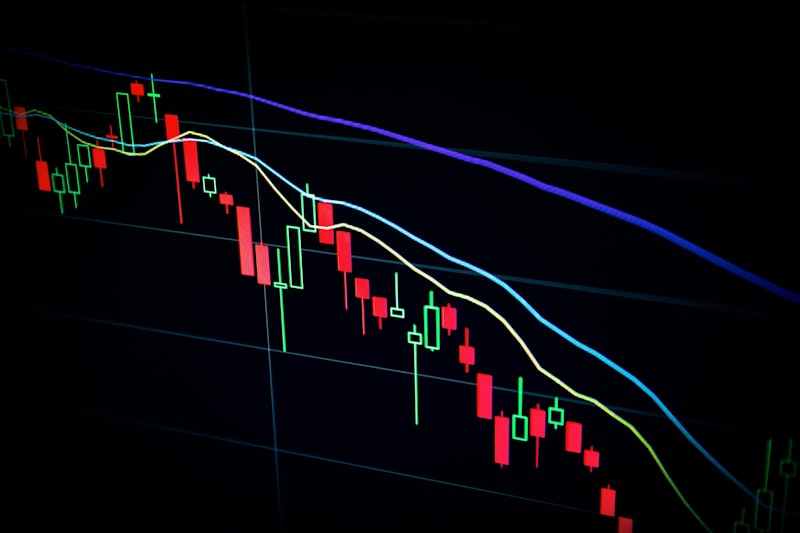 Image source: Pexels
Sources: S&P 500 at 7,409 — Trading Economics · Nvidia earnings — Nvidia investor relations · Walmart earnings — Walmart press release
Gold Retreats From $4,500 as Iran Deal Hopes Dim
Gold fell $24 to settle at $4,513.68 per troy ounce, sliding from the prior session’s gains as expectations for a USIran diplomatic breakthrough eroded. The metal had risen more than 1% on Wednesday following President Trump’s comments that the US was in the “final stages” of negotiations with Iran.
With Iran’s Supreme Leader hardening the nuclear stance and Hormuz reopening looking increasingly uncertain, the safe-haven bid that had supported gold earlier in the week has faded. The retreat places gold down 4.77% over the past month, though it remains up 36.78% from a year ago.
 Image source: Pexels
The tug-of-war between geopolitical risk premiums and Fed rate hike expectations is likely to define gold’s near-term direction. If the Fed signals it is prepared to move rates higher to combat inflation, gold could face further headwinds from higher real yields.
Sources: Gold price May 21 — Trading Economics · Gold hits record in January 2026 — Trading Economics
Dollar Strengthens to 99.3 as Inflation, Geopolitics Combine
The dollar index rose to 99.33 on Thursday, up 0.24% and approaching April highs, as a confluence of inflation concerns and Middle East tensions boosted demand for the greenback. The move was amplified by the sharp rise in oil prices, which tends to support the dollar given the US’s role as a net energy importer.
The euro fell against the dollar, with the DXY’s 57.6% euro weighting pulling the index higher as European markets absorbed their own concerns about energy cost pass-through. The yen was broadly weaker, with USDJPY pushing toward 150.
Markets are now pricing in a higher probability of a Fed rate hike in 2026 than they were at the start of the month, which has provided a structural bid for the dollar. Any further deterioration in USIran talks could extend the dollar’s gains in the near term.
Sources: Dollar index DXY — Trading Economics · DXY historical data — Trading Economics
Jobs Market: Resilient but Cooling
April nonfarm payrolls came in at 115,000 — well above the 62,000 consensus estimate — with gains in health care (+37K), transportation and warehousing (+30K), and retail trade (+22K). February’s figure was revised down by 23,000 to -156,000, while March was revised up by 7,000 to 185,000.
The unemployment rate held at 4.3%, but the number of unemployed rose by 134,000 to 7.37 million and total employment fell by 226,000 to 162.62 million. The labor force participation rate slipped to 61.8%, its lowest since October 2021, suggesting some workers are dropping out of the workforce rather than continuing to search for jobs.
Average hourly earnings rose 3.6% year-on-year, up from 3.4% in March, and real earnings fell 0.3% on an inflation-adjusted basis — a development that tends to complicate the Fed’s calculus around wage pressures.
Sources: Nonfarm payrolls April 2026 — Trading Economics · Unemployment rate — Trading Economics · BLS employment situation
Disclaimer: This report is for informational purposes only and does not constitute investment advice.